Offline AI for dental practices
AI assistance for your practice. Patient data never leaves the building.
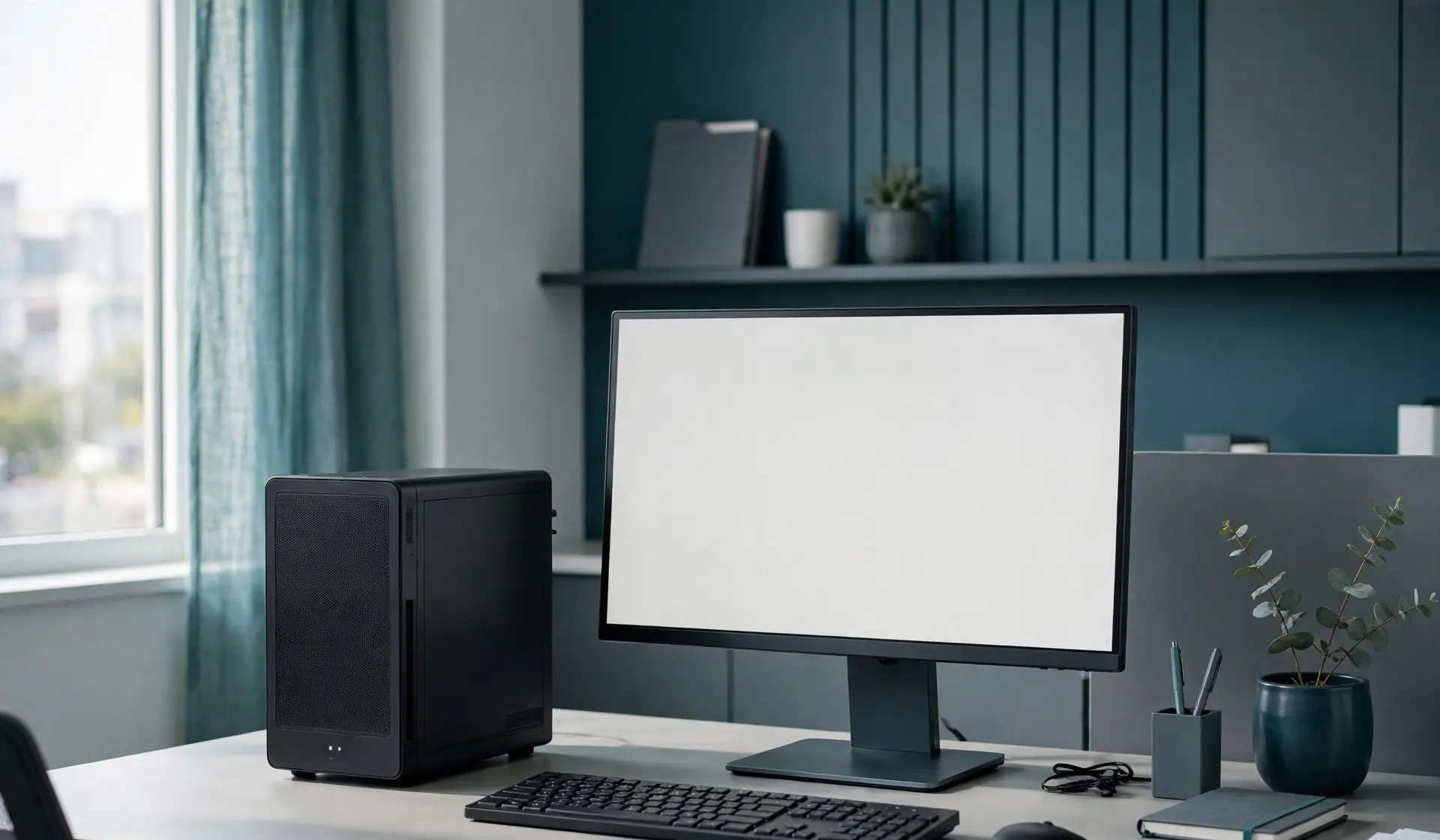
An offline workstation that drafts claim narratives and appeals, answers CDT coding and documentation questions, and looks up your office's own protocols — running entirely on a computer in your office. No internet required.
What it does
The paperwork side of the practice — drafting, coding questions, and protocol lookups — handled by a system that works only from your documents and the facts your staff enter.
Claim narratives
Drafted from the chart facts your staff enter into a required facts form — tooth, findings, existing restoration, plan. The system drafts only from those facts, and staff review every draft before it goes anywhere.
Appeal letters
Built from the denial and the chart facts, answering the payer's stated reason point by point, with the supporting attachments listed — such as the dated radiograph enclosed with the appeal.
Coding & documentation answers
CDT questions — the difference between D4341 and D4342, what documentation each code requires — answered from reference material loaded on the workstation, with the source shown.
Office protocol lookup
Your practice's own SOPs and policies — sterilization protocol, front-desk and billing policies, aftercare sheets — answered in plain language, with the document the answer came from named.
How it works
Three parts, all on one computer in your office. No cloud account, no subscription service, nothing transmitted out.
The writer
A local AI model installed on the workstation. It reads the material it's given and drafts in plain, professional language — claim narratives, appeal letters, and answers to questions. It runs on the machine itself, not on a server somewhere else.
The binder
Your practice's own documents and references: SOPs and protocols, office policies, aftercare sheets, coding references. This is the only knowledge the system answers from — your documents supply the requirements, your staff supply the facts.
The index
Search that finds the right pages in the binder and hands them to the writer before it answers. Answers cite the document they came from, so staff can check any answer against the source in seconds.
Retrieval, drafting, and citation were all tested and verified with the internet disconnected. If your connection goes down, the workstation doesn't notice.
Proven, and honest about its limits
EdgePlus AI has completed a full proof of concept on a laptop workstation, graded test by test. Here is what it did — including the test it failed, and what that failure changed in the design.
What the proof of concept showed
- Narrative, appeal, and coding tests passed when the chart facts were supplied — including a root canal narrative with no invented clinical findings, whose two framing errors were caught in staff review.
- Document retrieval verified — questions about office protocols answered from the practice's own documents, with the source named.
- Reference gaps fixed by documents — adding a tooth-numbering chart to the binder corrected answers the model had previously gotten wrong from memory.
- Every function tested offline — retrieval, drafting, and citation all worked with the internet unplugged.
The test it failed — and the design answer
We also tested the system the hard way: asked to draft a crown narrative given a tooth number and no facts at all, the model invented a complete, plausible, fictional narrative — findings, decay, radiographic evidence, even patient agreement — none of it real. Stronger instructions did not stop it.
So the product doesn't rely on instructions. Drafting is gated behind a required facts form: staff enter the chart facts first, the system drafts only from those facts, and staff review every draft before use. The model never sees an empty page — and a fact it wasn't given can't appear in the draft.
The 30-day trial
A structured month in your office, evaluated against measures agreed with you before day one — not against our promises.
Setup and baseline
A half-day install. We capture baseline numbers — how long narratives and appeals currently take — and read every setting back on screen together, so the configuration is verified, not assumed.
Your documents, loaded and tested
We load your office's own SOPs and policies — sterilization protocol, front-desk and billing policies, aftercare sheets — and build a graded test set from your documents, so accuracy is measured on your material.
Staff session
A 30-minute session with your team on the workflow: facts form → draft → review. What the system does, what it never does, and where human review sits.
Live use, with a simple log
The workstation is used in real work. Staff keep a simple log of drafts used, corrections made, and time taken — the raw material for an honest evaluation.
Evaluation meeting
We score the trial together against the measures agreed before day one: accuracy on a test set built from your own documents, draft fidelity — zero invented findings in accepted drafts — time saved per narrative and appeal against the Day-1 baseline, claim outcomes, and your staff's verdict.
Request a demo
See the workstation run the graded tests — live, and with the internet unplugged. Tell us a little about your practice and we'll set up a conversation. No obligation, and nothing confidential changes hands: our evaluation process is designed so your practice never has to share patient information.
Thank you — your request is noted.
We'll be in touch shortly to arrange a time. If you'd like to see the system sooner, the demo runs just as well with the internet unplugged — ask us to prove it.